USA Restoration Harrison
Harrison โ€ข NJ

Fire Damage Restoration in Harrison.

Soot removal, smoke odor mitigation, structural cleaning, and full reconstruction after fire events.

Local team in Harrison Honest, transparent pricing 24/7 emergency line
โ˜…
Local Based in Harrison, NJ
โ˜…
IICRC S500 + S520 + S700 protocols
โ˜…
Insurance Direct billing to all major carriers
Service Overview

How We Approach It

The "house seems fine, just smells smoky" calls are deceptive. Soot has migrated through the whole HVAC system, settled in attic insulation, and contaminated content far from the fire origin. We scope the full structure, not just the visibly damaged room.

What's Included

  • Soot + smoke odor removal
  • HVAC decontamination
  • Pack-out + content cleaning
  • Hydroxyl odor treatment
  • Structural rebuild
  • Insurance-scope documentation

How Fire + Smoke Damage Actually Spreads Through a Property

The fire department's job is to put the fire out. They do it well. What they leave behind is the start of the restoration job โ€” and the damage that determines the eventual claim size has very little to do with the visible burn area.

Soot is acidic and moves on air currents. While the fire was burning, the HVAC system likely circulated soot-laden air through every room of the structure. Soot settled on horizontal surfaces, infiltrated upholstery and carpet fibers, and coated the inside of ductwork. Heat caused volatile organic compounds in plastics, fabrics, and finishes to off-gas, and those compounds redeposited on cooler surfaces as a sticky odor-bearing residue that does not wash off.

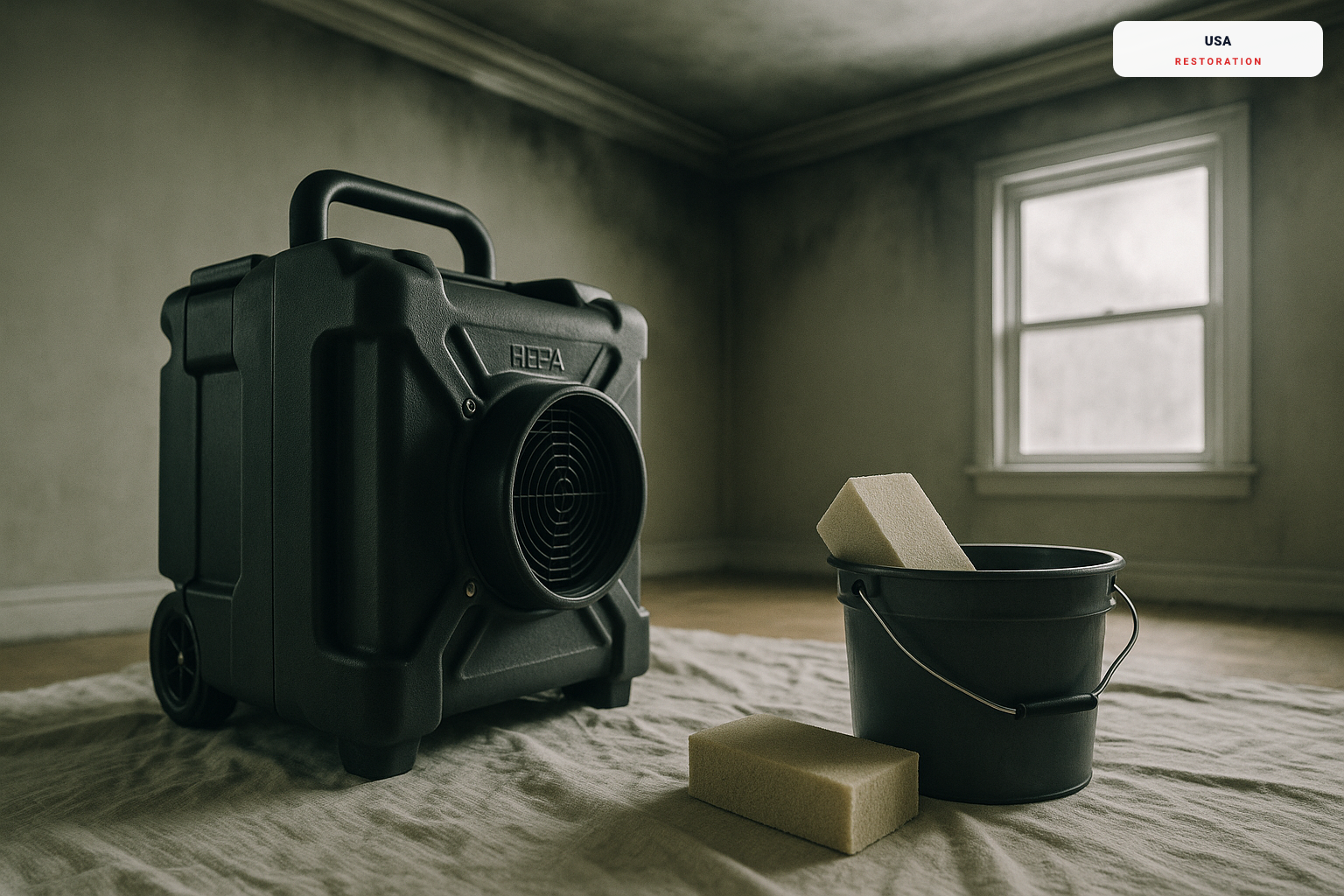
Our scope addresses each: HEPA vacuuming of horizontal surfaces, dry-chem sponge cleaning of walls and ceilings, HVAC duct cleaning per NADCA standards, content pack-out for items that need shop-cleaning, and hydroxyl or ozone treatment for porous materials in the affected envelope. None of this is optional โ€” skipping any phase leaves residual odor that returns within weeks.

Smoke Odor: Why Deodorizer Does Not Work

Air freshener, ozone-spray products from the home center, and standard household cleaners do not remove smoke odor. They mask it temporarily. The smoke molecules โ€” many tens of thousands of distinct VOCs depending on what burned โ€” have bonded to porous materials at the molecular level. The odor returns the moment the masking scent fades.

Our protocol uses one or more of: hydroxyl generators (safe to run in occupied spaces, breaks down VOCs at the molecular level over 3-7 days), ozone treatment (occupied spaces evacuated during run, fast-acting, used for severe cases), thermal fogging (penetrates porous materials in the same patterns as the original smoke), and source removal (for materials that cannot be deodorized โ€” insulation, drywall, certain fabrics). Selection depends on the loss type, materials affected, and how quickly the space needs to be re-occupied.

Verification is what closes the loop: we do air quality testing before reconstruction starts. If readings are above baseline, we extend treatment. The structure is not "done" because the visible damage is repaired โ€” it is done when the air reads clean.

Process

Our Process

  1. 01

    Phone Triage

    Real human dispatch from Harrison. We sort loss type on the first call so the truck arrives equipped for what we are walking into.

  2. 02

    On-site Assessment

    Photos of every wet surface, moisture readings of every substrate, written cause-of-loss narrative, confirmation the source is fully off.

  3. 03

    Containment + Extraction

    Standing water removed first. Affected areas isolated to prevent spread. Damaged porous material cut to documented flood line and bagged for disposal.

  4. 04

    Documented Drying

    Industrial drying equipment sized for the loss volume. Daily moisture readings logged on a building diagram. Equipment runtime tracked for the insurance claim.

  5. 05

    Reconstruction + Walkthrough

    Drywall, flooring, paint, trim โ€” all matched to pre-loss condition. Final walkthrough confirms the work is done before the project closes.

The difference

Why Customers Choose Us

Real reasons. No invented stats, no manufactured awards.

  • 01
    โœ“

    24/7/365 Emergency Response

    Holidays, weekends, middle of the night โ€” same response standard. Property losses do not check the calendar. Neither do we.

  • 02
    โœ“

    Multi-Unit + Commercial Capable

    COIs on file at most major Hudson County multi-unit buildings. After-hours noise scheduling for tenant-occupied commercial. Per-unit documentation discipline for HOA + condo claims.

  • 03
    โœ“

    Pre-Staged For Surge Events

    Storm season we add equipment + tech capacity at our Harrison base. When the call volume spikes after a major weather event, individual response times do not slip.

Service Area

Serving Hudson County

Our Harrison dispatch covers a tight radius across Hudson County. The compact service area is intentional โ€” restoration work scales with response time, and minutes save material. Kearny, Newark, and Jersey City all reach inside 30 minutes during normal traffic.

Counties Covered

  • Hudson County, NJ

Cities We Service

Each Hudson city below opens a local page with arrival times from our Harrison base and the loss patterns we handle most often in that municipality.

Not sure if you're in our area? Call 201-510-5447 and we'll tell you in 30 seconds.
FAQ

Frequently Asked Questions

If you don't see your question, just call or message us.

How long does drying take after a water loss? +

Three to five days for a typical residential water loss. Hardwood floors and dense materials can take longer โ€” sometimes 7-10 days. We monitor with calibrated moisture meters daily and only stop drying when readings return to dry-standard moisture content for the materials in your home.

Will my floors and walls have to come out? +

Often less than people expect. Category-1 (clean supply-line) water that we reach inside 24-48 hours can usually be dried in place. Category-3 (sewage, river, ground intrusion) is different โ€” IICRC S500 protocol requires removing porous materials those waters contacted. We cut to a documented flood line and replace what comes out.

How do you make sure mold does not come back? +

Mold prevention happens during drying, not after. We hold the structure under controlled airflow until moisture meters confirm wood, drywall, and substrate are back inside the manufacturer-approved dry range. Anything porous that absorbed contaminated water comes out. Surfaces receive a registered antimicrobial before reconstruction. We also pull access panels and inspect HVAC ductwork if water tracked into the system.

Are you open weekends and holidays? +

Emergency dispatch is 24/7/365 including all holidays. Reconstruction work and consultations follow business hours but we can adjust for client schedules.

What is the difference between water damage and flood damage? +

Water damage is sudden and accidental โ€” pipe burst, appliance failure, storm intrusion through a damaged roof. Flood damage is rising surface water from outside the structure. Standard homeowners insurance covers water damage. Flood requires separate NFIP flood insurance. We document the source clearly so the right policy pays the claim.

How much does water damage restoration cost? +

A typical Harrison residential water mitigation runs $3,000-$8,000 depending on loss size and material types affected. Reconstruction adds another $5,000-$30,000 depending on scope. Most jobs are insurance-billed after deductible. We give a realistic estimate after the on-site assessment, not a guess on the phone.

Do I have to leave my home during restoration? +

For most water-damage jobs, no. We work in the affected area while you live in the rest of the home. Cat-3 sewage cleanup requires evacuation of the affected area during the cleanup phase because the work itself aerosolizes pathogens. Major fires often require temporary relocation while smoke + soot are addressed. We discuss displacement on the first call so you can plan.

Call Now โ€ข Harrison

Need Restoration in Harrison? One Call Gets a Crew Moving.

One phone call gets a truck rolling. Real Harrison team, real local response time, no automated phone tree. We'll be on site fast.

๐Ÿ“ž Call 201-510-5447